
Monarchy Reshaped: William & Kate Take the Lead as King Charles Fades

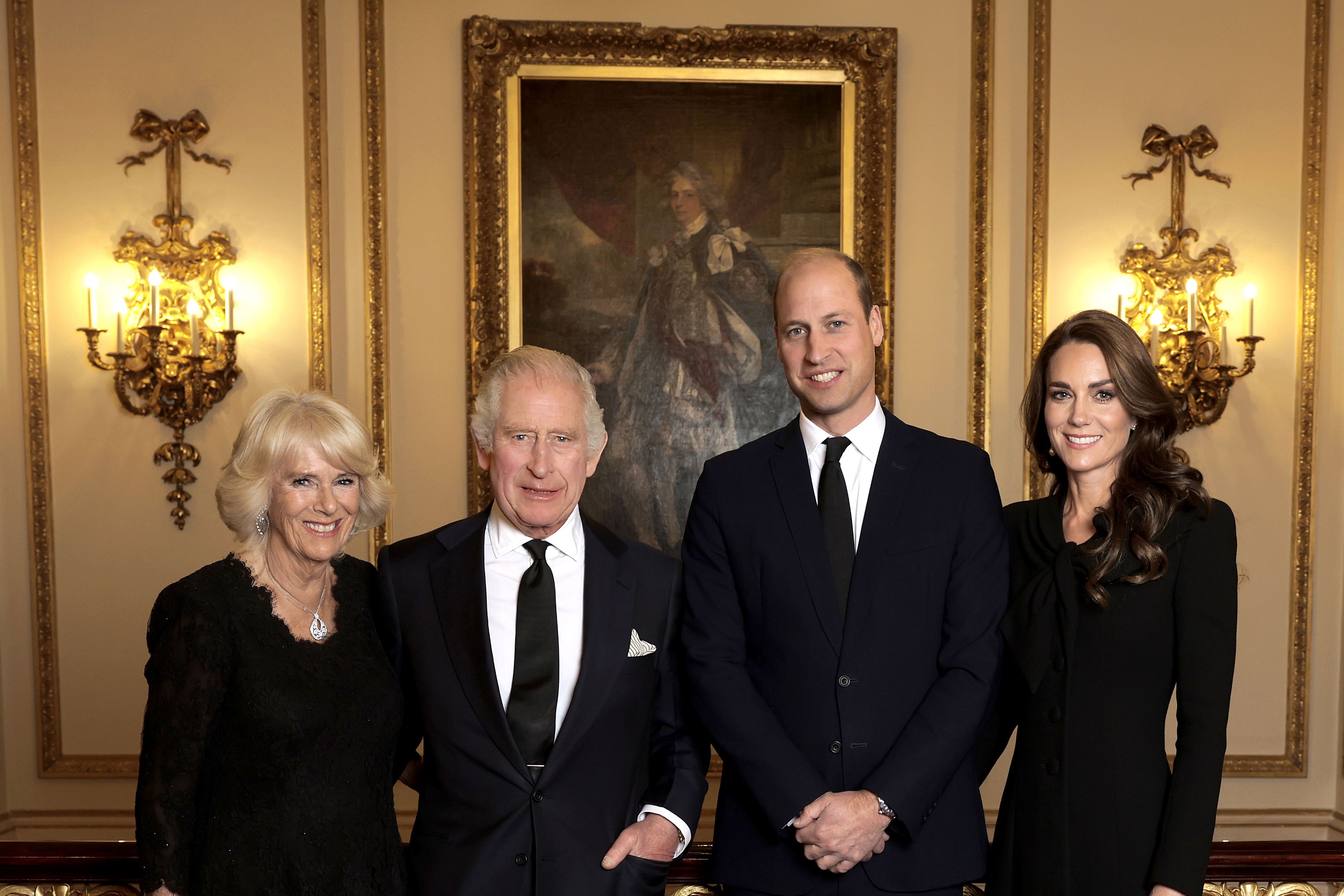
It began as a whisper in palace corridors, but quickly roared across Britain: King Charles III, weakened by ongoing health struggles, has made a decision without precedent in modern times. In a private council chamber within Buckingham Palace, the King formally named Prince William and Catherine, Princess of Wales, as
Not since the Middle Ages has such a move been contemplated — a reigning monarch willingly ceding power not to one successor, but to two. For the first time, authority is shared by a royal couple, reshaping the very foundation of monarchy.
A Moment of History
Those in the council chamber describe an atmosphere of hushed anticipation. Senior courtiers, bishops, and advisors leaned forward as the King, frail yet composed, delivered words destined to echo through the ages.
“I name my son William, and his wife Catherine, to share the duties of the Crown with me,” Charles declared.
Gasps filled the room. Some whispered disbelief. But soon came nods — then applause. It was not ceremonial flourish, but a deliberate transfer of authority.
Charles’s declining health had already limited his public duties, often leaving William to stand in his place. Yet the inclusion of Catherine shocked even seasoned palace insiders. Never in modern history had a royal consort been granted such formal power while the sovereign still lived.
A New Balance of Power
The decision has shaken centuries of precedent. Traditionally, regency — temporary guardianship of the throne — was a burden carried by a single heir. By naming both William and Catherine, Charles has redefined the role as partnership.
For William, the moment had been long expected. He has been groomed for kingship since birth. For Catherine, it was an extraordinary elevation — from “supportive spouse” to equal architect of the monarchy’s future.
Observers noted William’s solemn bow of acceptance. Catherine, outwardly calm, was said to be deeply moved by the enormity of her new role.
“This isn’t just about succession,” a royal historian remarked. “It is about survival. The monarchy has chosen partnership over hierarchy, relevance over ritual.”
Catherine’s Rise
Catherine’s inclusion is no token gesture. It is transformative.
For over a decade, she has carved her place not as a passive consort, but as an active leader — spearheading campaigns for mental health awareness, early childhood development, and sustainable living. Her calm demeanor, resilience under pressure, and modern approach to service have earned public trust at home and abroad.
Now, her qualities are formally recognized. She is not merely beside William; she is with him, sharing the mantle.
Public reaction has been strikingly positive. Polls suggest overwhelming support, with Britons embracing Catherine’s rise as a blend of tradition and progress. Headlines hail her as

Breaking With Tradition
Not everyone is comfortable. Palace insiders admit unease among the old guard, for whom the monarchy’s power has always been singular, never shared.
“Tradition has preserved us,” one courtier warned. “Changing it risks weakening the Crown’s image.”
But others argue the opposite: that survival demands evolution. “This is monarchy in the 21st century,” one advisor countered. “It must adapt, or it will be left behind.”
The Charles Calculation
Far from weakness, Charles’s decision may be his most visionary act. By sharing power now, he ensures stability during his illness, secures continuity for the Crown, and signals humility before the demands of modern Britain.
He could have clung to power. He could have delayed. Instead, he entrusted the future — not only to his son, but to his daughter-in-law.
“In doing so,” one commentator noted, “he showed wisdom: monarchy is not about ego, but endurance.”
The Future of the Crown
What does co-regency mean for Britain?
It means a monarchy that feels closer to its people. William and Catherine have built a reputation for balance: regal in duty, yet relatable as parents. Their willingness to speak openly about struggles, from grief to mental health, resonates with a public tired of distant royalty.
It also means new visibility for Catherine. Her influence will extend beyond patronages and public appearances to decision-making at the very heart of the monarchy. She is no longer just a figure of grace, but of governance.
For their children — George, Charlotte, and Louis — it means growing up under a new model: a monarchy defined by teamwork, compassion, and shared responsibility.
A Cultural Reset
The appointment of William and Catherine as co-regents is more than a royal shuffle. It is a cultural reset — a recognition that monarchy must evolve to remain meaningful.
Catherine’s journey underscores this transformation. Once dismissed by tabloids as “Waity Katie,” she has emerged as one of the most respected women in the world. Her story mirrors the monarchy’s: tested, criticized, but ultimately renewed through resilience.
As King Charles fades into the twilight of his reign, the future takes shape not in the shadow of tradition, but in the light of innovation. William and Catherine stand not just as heirs, but as partners — architects of a monarchy that bends, but does not break.
Final Thoughts
History will record King Charles’s choice as extraordinary. By naming William and Catherine as co-regents, he has broken centuries of precedent to secure the Crown’s future.
For William, it is the beginning of responsibility long prepared for.
For Catherine, it is the triumph of grace, duty, and evolution.
For Britain, it is the dawn of a monarchy reshaped for the modern age.
The Crown endures — not by resisting change, but by embracing it.
The Stark Contrast Between Princess Anne’s Daughter and Camilla’s Daughter: A Royal Tale of Elegance, Ambition, and Legacy

In the gilded halls of the British royal family, there are certain names that stand out not just because of their titles, but because of the legacy they carry and the strength of their character. Among these names are two royal daughters: Zara Tindall, the daughter of Princess Anne, and Laura Lopes, the daughter of Camilla, Queen Consort. While they both carry royal blood, their paths, personalities, and ambitions couldn’t be more different, creating a stark contrast between the two women that has captured the public’s attention for years.
Zara Tindall: A Legacy Built on Personal Strength
Zara Tindall has always been the picture of quiet confidence and determination. Born to Princess Anne, Zara was raised far from the spotlight of the monarchy’s more traditional roles. Instead, she carved her own identity in a realm that demands hard work, grit, and perseverance: equestrian sports. From a young age, Zara developed a passion for horseback riding that would ultimately lead her to the European Code Championship in 2005. She didn’t just participate in the sport — she excelled, winning accolades and establishing herself as one of the most skilled riders in the world.
Unlike many of her royal counterparts, Zara has never been one to lean on the royal aura or privileges. Her story has been one of carving her own path, building a career that doesn’t rely on the royal title she was born with. In fact, when it came time for the Queen to bestow royal titles upon her grandchildren, it was Princess Anne’s decision to decline a title for Zara. This choice reflected a deeper value: Zara was determined to make her own way, without the weight of a title hanging over her. Princess Anne herself, known for her down-to-earth approach to royal life, understood this. It wasn’t about titles; it was about living up to one’s own potential. And for Zara, that meant letting her talents in horseback riding — and not her royal bloodline — define her.
Zara’s independence and refusal to embrace the privileges afforded by her royal lineage have made her not just a royal daughter, but a symbol of personal strength. She’s always been a reminder that the royal family isn’t just about titles and power — it’s about what you do with what you’re given. Her elegance on the field of competition, and her quiet poise in public, have made her one of the most respected figures in the royal family, admired for her talent, her humility, and her determination to live life on her own terms.
Laura Lopes: The Struggle for Royal Recognition
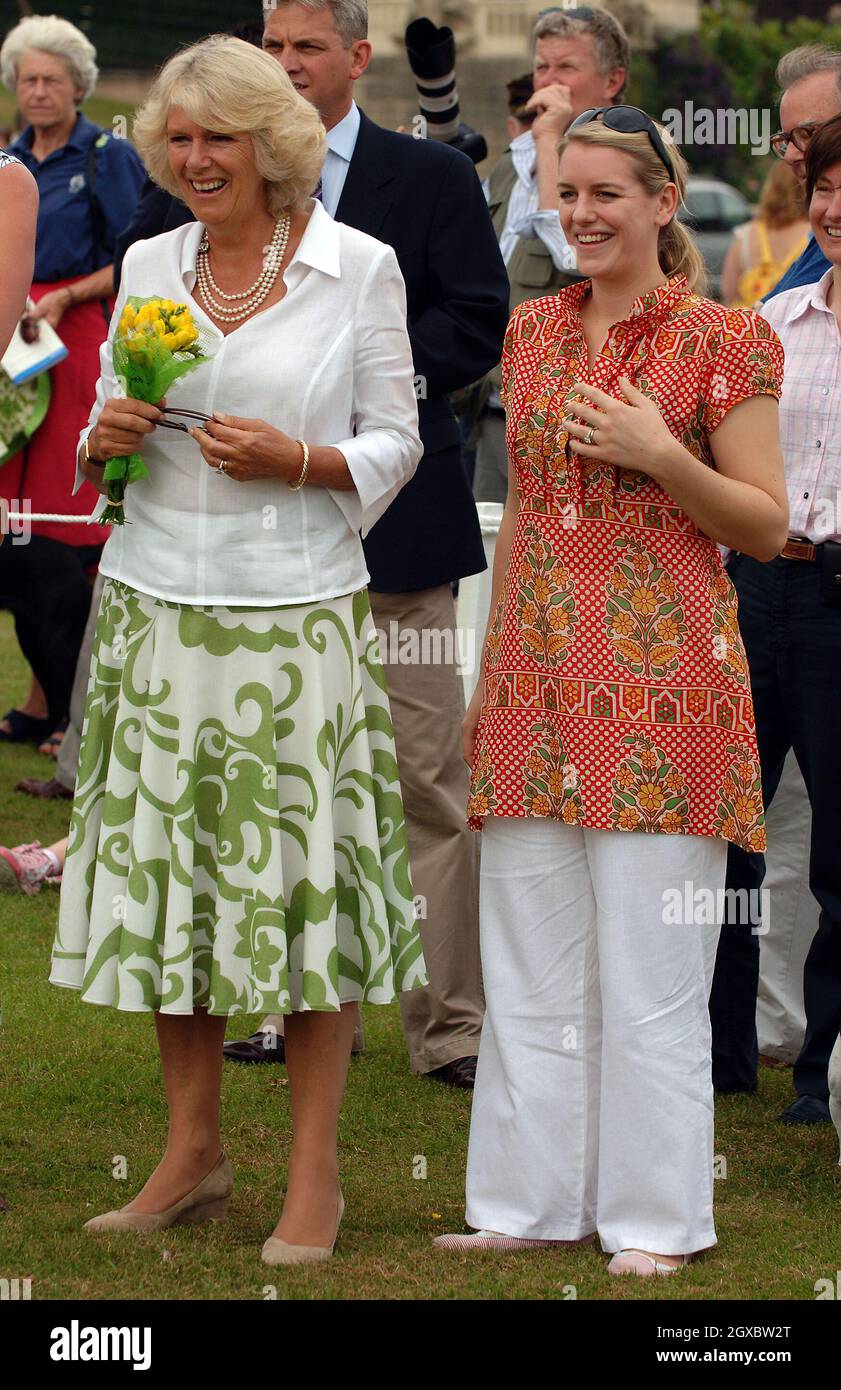
In contrast, Camilla’s daughter, Laura Lopes, has always appeared to struggle with the complexities of her royal position. Despite being raised in a world of privilege, Laura has never quite been able to break free from the shadow of her famous stepmother, Queen Consort Camilla, and her royal heritage. Her mother, who has long been at the heart of royal drama, has consistently tried to push Laura closer to the spotlight of royal life — sometimes at the expense of the younger Lopes’ own desires.
In an attempt to secure Laura’s place within the royal family, Camilla even tried to arrange a closer relationship between Laura and Prince William, with hopes that they might one day marry. However, it was quickly apparent that Laura did not have the same charisma or appeal as Catherine, Duchess of Cambridge. Despite her mother’s best efforts, Laura was seen as far less outstanding and, in William’s eyes, simply not a fit for the royal family in the way Catherine was.
Laura’s occasional public appearances alongside her mother, trying to make her name known at royal events, have only served to highlight the contrasts between her and Zara. While Zara remains poised and elegant, blending seamlessly with the royal family’s traditions without forcing herself into the spotlight, Laura has often been seen fidgeting and uncomfortable in public. The contrast in their public behaviors is striking. On important occasions, Laura has been known to stand with her hand in her pocket or appear disengaged, which contrasts with Zara’s effortless grace and energy.
The public’s perception of Laura’s appearances at royal events often feels forced, as if she’s trying too hard to make her presence felt. In contrast, Zara has always had a natural elegance, never needing to seek attention, yet commanding it with her quiet grace. This subtle, yet clear difference between the two women reflects the varying approaches they take toward their royal heritage — one that embraces it with quiet strength, and another that seems to struggle under its weight.
A Battle of Legacy and Public Perception
The tale of Zara and Laura is more than just a comparison between two royal daughters; it’s a story of legacy, identity, and the ways in which the public perceives them. Zara’s refusal to use her royal connections to gain favor in her chosen field is seen as a powerful act of independence. She embodies the values of hard work and personal achievement. Her legacy, built on merit and talent, is something many people can relate to — especially in a world where titles often mean little compared to personal success.
On the other hand, Laura’s story is one of trying to find her place within the royal hierarchy. While she may have the bloodline and the title, she has yet to make a name for herself in a way that resonates with the public. Her mother’s efforts to push her forward have sometimes seemed to do more harm than good, as it’s hard to hide the fact that Laura has never quite measured up to the standard set by Zara.
The contrast between Zara and Laura is a reflection of the evolving nature of the royal family. While it may have once been enough to simply be born into royal blood, today’s royals are judged by their actions, their ability to connect with the public, and their personal achievements. Zara has proven that a royal title is no guarantee of success or respect — it’s the person behind the title that matters.
As the monarchy continues to evolve, the royal family’s younger generation, like Zara, will likely play a crucial role in shaping its future. Zara’s story of self-determination, resilience, and quiet strength offers a model for modern royals — one that balances tradition with the demands of the modern world. Meanwhile, Laura’s struggle to find her place in the royal family serves as a reminder that a title alone does not guarantee success or public affection.
In the end, Zara Tindall’s legacy is one of independence, grace, and personal achievement — qualities that resonate far beyond the walls of Buckingham Palace. It’s a story that proves that true royal power isn’t about titles; it’s about how you use your platform to make a difference. And Zara has certainly made her mark


